Profiteer van gratis verzending op alle bestellingen boven de €50


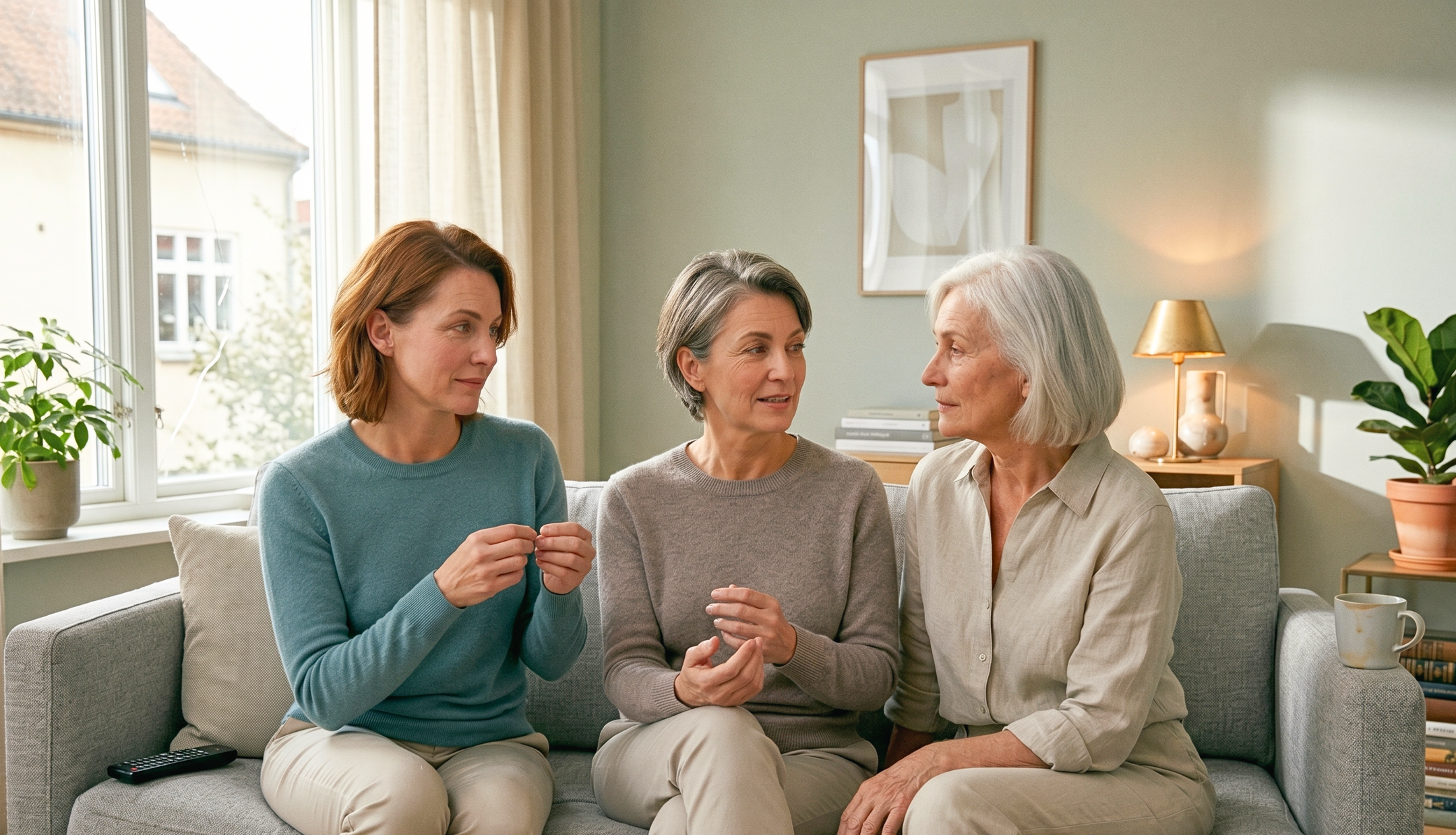
Menopause in Your 40s, 50s, and 60s: Why It Feels So Different at Each Stage
One of the hardest parts about menopause is how confusing it can be.
Because what it feels like in your 40s is not what it feels like in your 50s.
And what you deal with in your 50s can look completely different again in your 60s.
So it’s easy to question yourself.
You might think something is wrong because your experience doesn’t match what you’ve heard.
Or you might not even realize what you’re feeling is part of menopause at all.
But for many of us, the confusion is not in our heads.
It’s coming from the fact that menopause changes depending on your stage of life.
In Your 40s: It doesn’t look like menopause yet
This stage can feel the most confusing.
You’re still getting your period, even if it’s not as regular. You’re still handling your day the same way you always have. So when something feels off, it is easy to brush it aside.
If you’ve ever noticed your cycle shifting, your sleep getting lighter, or your mood changing faster than it used to, you’re not imagining it.
And intimacy can start to feel different too.
Maybe you feel less interested. Maybe things feel a bit drier or less comfortable than before. Not all the time, but enough that you notice.
What makes this stage hard is that no one really confirms it for you.
You’re left wondering if it’s stress, hormones, or just life catching up with you.
In Your 50s: It becomes harder to ignore
This is when things usually feel more obvious.
Your period may stop. Or it becomes unpredictable enough that you know something has shifted.
You might be dealing with hot flashes, night sweats, and sleep that never quite feels like enough. Your energy can feel lower, and your body may not respond the way it used to.
Dryness often becomes more noticeable here.
Not just occasional, but something that starts affecting comfort. Especially during intimacy.
And this is where a lot of us begin to pull back.
Not because we want to, but because it feels different now. Less predictable. Sometimes uncomfortable.
That can quietly affect how close you feel to your partner, and even how you feel about yourself.

In Your 60s: When it quietly becomes your new normal
By this stage, some symptoms may settle down.
But others stay.
Dryness is often one of them.
It can feel more constant. More noticeable. Less like something that comes and goes, and more like something you just live with.
You might find that intimacy takes more effort, or that you avoid it altogether because it does not feel the way it used to.
And over time, many of us stop expecting it to improve.
We adjust. We work around it. We tell ourselves this is just part of getting older.
Even if a part of us still misses how things used to feel.
Why this is happening, in simple terms
Across all of these stages, the common thread is hormonal change.
As estrogen levels shift, it affects how your body maintains natural moisture, comfort, and tissue health.
That is why things like dryness, sensitivity, and changes in intimacy show up.
Not all at once. Not the same way for everyone. But enough that you feel the difference.
The part that actually matters
If you’ve seen yourself in any of this, you’re not the only one.
Whether you’re just starting to notice changes in your 40s, dealing with more obvious shifts in your 50s, or adjusting to ongoing changes in your 60s, your experience makes sense.
And it is okay to want more than just “getting used to it.”
Where things can start to feel different
This is where something like HydraHer can feel like a practical kind of support.

It is a natural, hormone-free supplement designed to support moisture, comfort, and intimacy from within.
For many of us, that matters.
Because it does not feel like a drastic step. It does not feel overwhelming. It is simply a way to support your body as it changes.
And sometimes, that is all we are really looking for.
A quiet reminder
No matter what stage you are in, this part of your life is not something you have to give up on.
You are still allowed to want comfort.
You are still allowed to want closeness.
And you are not wrong for wanting to feel like yourself again.
